Join Our Journal

.svg)


From Da Vinci to Cézanne: The Three Most Expensive Paintings Ever Sold
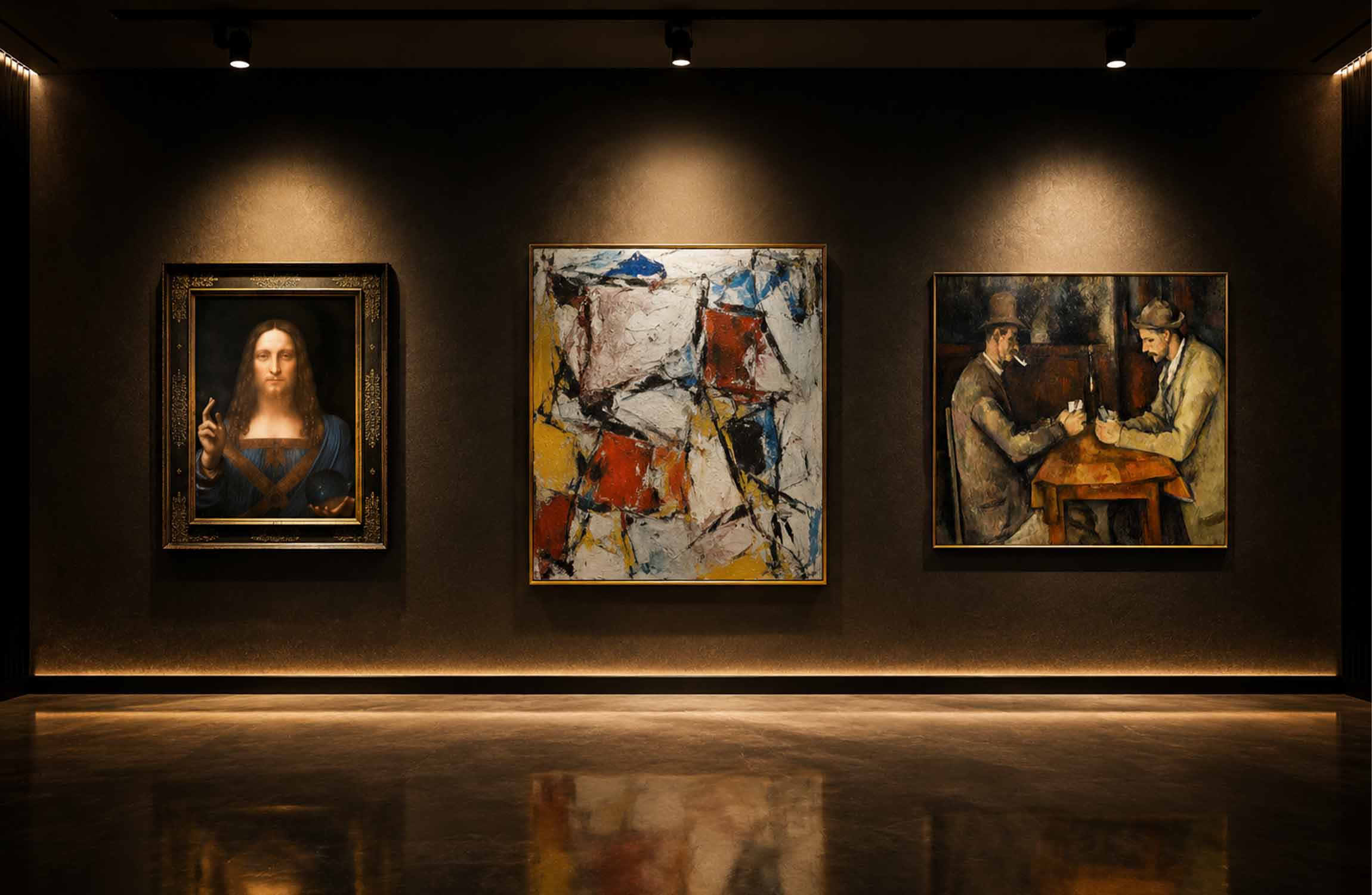
From Leonardo da Vinci's Salvator Mundi to Paul Cézanne's The Card Players, discover the three most expensive paintings ever sold and the extraordinary stories behind their record-breaking prices. Together, these masterpieces generated more than $1 billion in sales and continue to redefine the limits of the global art market.
Luxury is often measured in penthouses overlooking Monaco, custom-built superyachts, or rare watches that trade hands for millions. Yet some of the world's most extraordinary displays of wealth hang quietly on a wall.
Over the past two decades, a handful of paintings have achieved values so extraordinary that they have surpassed the price of private islands, Gulfstream jets, and some of the most prestigious estates ever sold. These masterpieces are no longer viewed simply as works of art. They have become symbols of cultural power, financial influence, and global prestige.
The art market operates unlike any other luxury sector. While a yacht can be replicated and a luxury residence can eventually be replaced, a masterpiece by Leonardo da Vinci or Paul Cézanne exists only once. That rarity has transformed a select group of paintings into some of the most coveted assets on Earth.
Just as collectors compete for ultra-rare timepieces and exceptional whisky collections, art buyers pursue works that transcend generations. The same fascination with scarcity can be seen in legendary bottles such as the Macallan 1926, which have become some of the most valuable whisky collectibles ever sold. The same passion that drives collectors toward the world's most expensive Audemars Piguet watches or ultra-rare Macallan bottles can also be found in the world's most prestigious art sales.
Today, we explore the three paintings that shattered every record and redefined the limits of what collectors are willing to pay.
1. Salvator Mundi, Leonardo da Vinci
When Salvator Mundi appeared at auction in 2017, few could have predicted the frenzy that would follow.
Attributed to Leonardo da Vinci, the painting depicts Jesus Christ holding a crystal orb while raising his right hand in blessing. For centuries, the work disappeared from public view, changing hands multiple times before experts identified it as a possible lost masterpiece by one of history's greatest artists.
The result was extraordinary.
After an intense bidding war lasting nearly twenty minutes, the painting sold for an astonishing $450.3 million, making it the most expensive painting ever sold.
Beyond the price itself, the sale demonstrated the unique status of Leonardo's work. Fewer than twenty paintings are generally attributed to the Renaissance master, making each one exceptionally rare.
Unlike luxury assets that can be manufactured in limited quantities, there will never be another Salvator Mundi. For collectors, that level of scarcity is almost impossible to replicate.

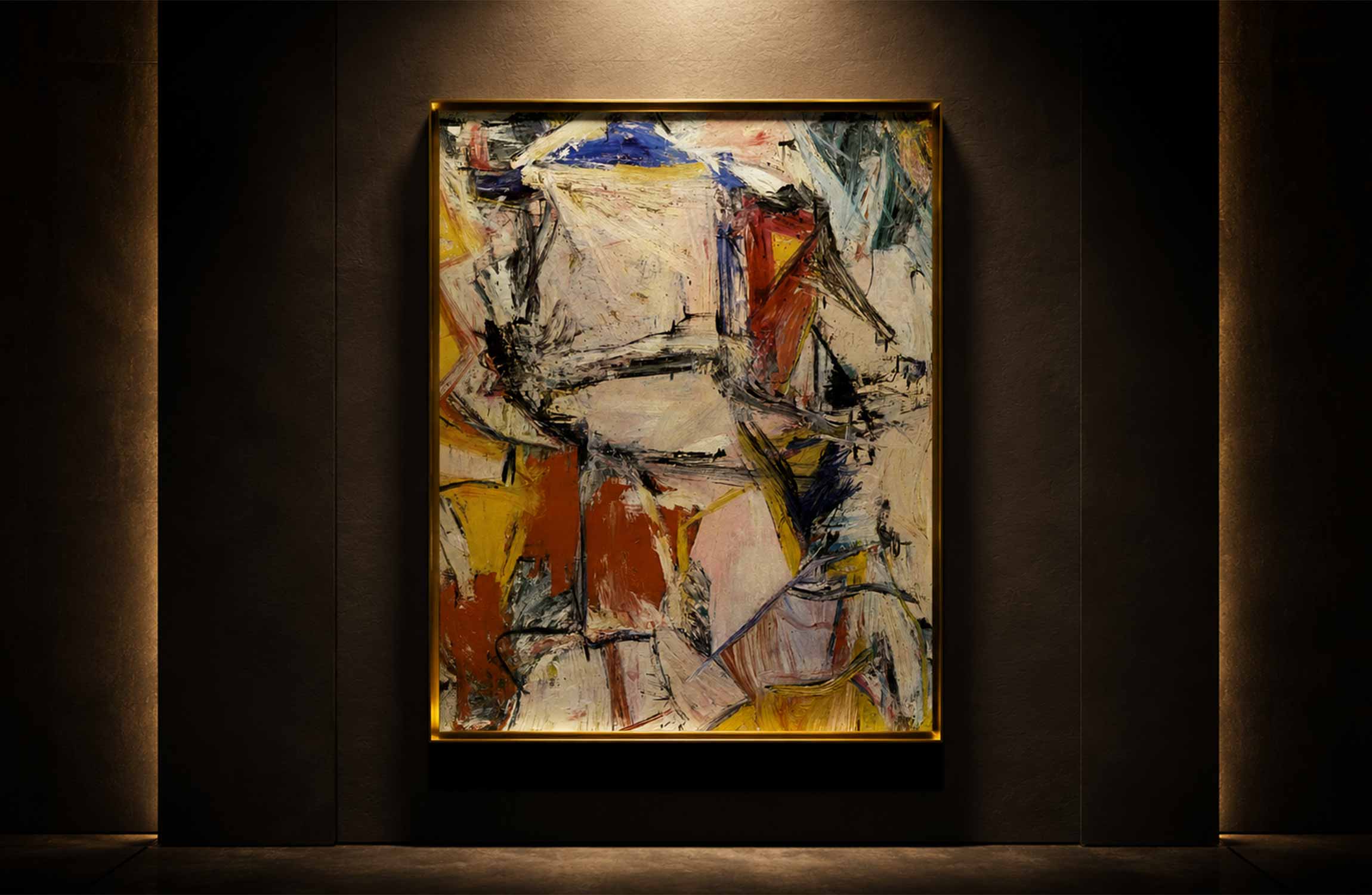
2. Interchange, Willem de Kooning
At first glance, Interchange appears dramatically different from traditional masterpieces.
Created in 1955 by Dutch-American artist Willem de Kooning, the painting became one of the defining works of Abstract Expressionism. Its energetic forms and vibrant colors represented a turning point in post-war American art.
In 2015, the artwork was reportedly acquired in a private transaction for approximately $300 million.
The sale highlighted a broader shift within the art market. Collectors were no longer focused solely on Old Masters. Twentieth-century art had become one of the most competitive and valuable categories in the world.
For many collectors, Interchange represents far more than a painting. It symbolizes an entire artistic movement that reshaped modern culture.
Its sale confirmed that contemporary masterpieces could rival and sometimes exceed the value of historic treasures.
3. The Card Players, Paul Cézanne
Few artists have influenced modern art as profoundly as Paul Cézanne.
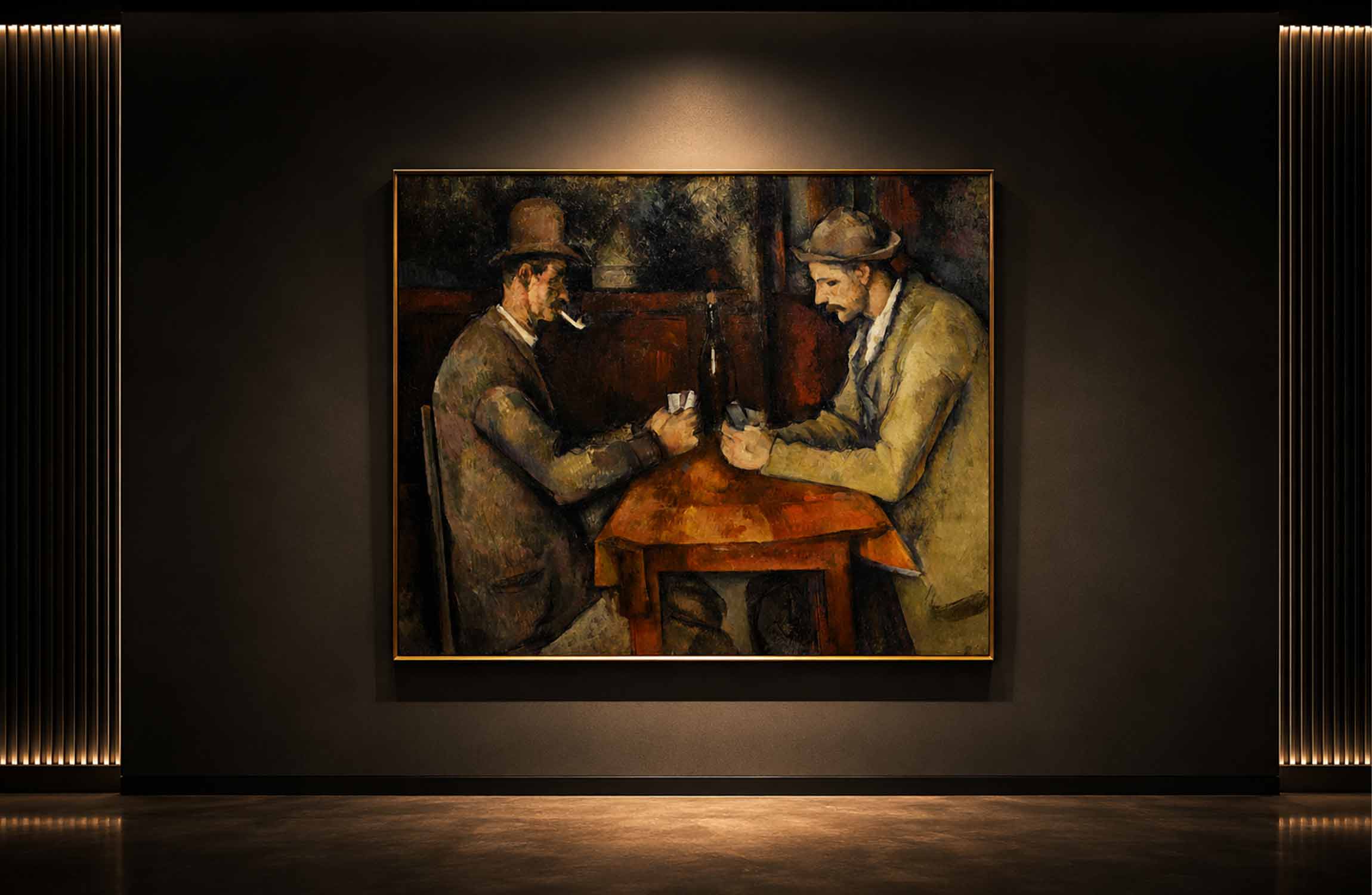
His series The Card Players, created during the 1890s, is considered one of the most important achievements of Post-Impressionism. The paintings depict peasants quietly engaged in a card game, yet their impact on art history extends far beyond the simple scene they portray.
One version of The Card Players was acquired by the royal family of Qatar in a deal estimated between $250 million and $274 million.
At the time, it became one of the most expensive private art transactions ever completed.
The acquisition reflected a growing trend among sovereign wealth funds and royal collections seeking to secure culturally significant masterpieces. These purchases are often viewed not only as investments but also as long-term assets that strengthen national cultural prestige.
Today, The Card Players remains one of the defining symbols of the global art market.
Why Do Collectors Pay So Much?
The question inevitably arises: why would anyone spend hundreds of millions of dollars on a painting?
The answer lies in a combination of rarity, history, cultural significance, and prestige.
A masterpiece by Leonardo da Vinci cannot be reproduced. A Cézanne that influenced generations of artists cannot be recreated. Ownership grants access to a level of exclusivity that even the most expensive luxury goods struggle to match.
In many ways, these paintings occupy the same category as the world's most exceptional residences, rare collectible watches, and legendary whisky collections. They represent the pinnacle of scarcity.
For the world's wealthiest individuals, acquiring such a masterpiece is not simply a purchase. It is the acquisition of a piece of human history.
Final Thoughts
While luxury headlines often focus on record-breaking mansions, superyachts, and rare timepieces, the art market continues to produce some of the most astonishing transactions in history.
From Leonardo da Vinci's Salvator Mundi to Cézanne's The Card Players, these masterpieces demonstrate that the ultimate luxury may not be something that moves across the ocean or sits in a private garage.
Sometimes, it is simply a painting hanging on a wall.
And in the case of these three masterpieces, that wall may hold well over a billion dollars in artistic history.
Image
Gallery.


Explore
Related posts.

Get
Inspiration
@luxurymedia