
Join Our Journal

.svg)



This Mykonos Residence Is Changing How We Think About Living in the Mediterranean
Set into the hills of Mykonos, AIMASIA Residence redefines Mediterranean living through architecture that blends permanence, restraint, and landscape-driven design.
For decades, Mediterranean living has been defined by a set of familiar images: whitewashed villas, panoramic terraces, and an idealised relationship with the sea. Yet beneath these visual clichés, a quieter evolution is taking place one that rethinks not just how homes look, but how they exist within their landscape.
Set into the hills of Mykonos, AIMASIA Residence represents this shift. More than a private villa, it is an architectural statement about permanence, restraint, and the future of residential living in fragile environments.
This is not a house designed to dominate its surroundings. It is one conceived to belong to them. Aimasia Residence in Mykonos, contemporary Mediterranean villa integrated into the island landscape overlooking the Aegean Sea

A Residence Shaped by the Land, Not Imposed Upon It
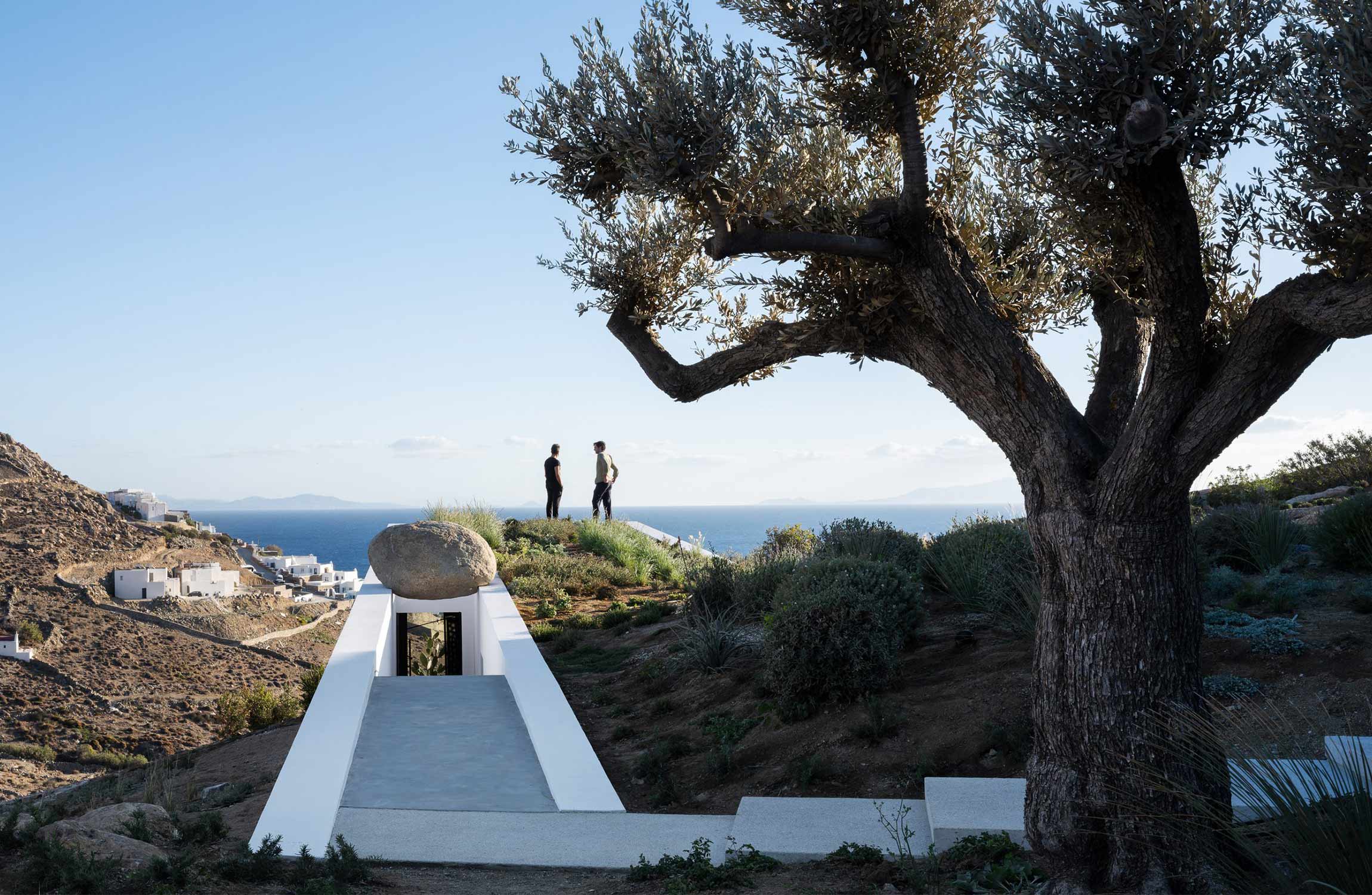
Rather than carving the site into submission, AIMASIA follows the natural contours of the terrain. The residence unfolds horizontally along the hillside, anchored by a long dry-stone wall inspired by traditional Greek agricultural terraces a structural gesture that both supports and defines the architecture.
This approach is intentional. By embedding the home into the landscape rather than elevating it above it, the project rejects spectacle in favour of continuity. The land remains legible. The architecture becomes part of the terrain’s rhythm.
In a region where many contemporary villas prioritise visibility, AIMASIA chooses discretion.

When Architecture Becomes an Extension of Geography
The design language of the residence draws directly from Mykonos itself. Stone, mineral textures, and earth-toned materials dominate both interior and exterior spaces, creating a seamless transition between built form and environment.
Rather than relying on decorative excess, the house uses material honesty to establish atmosphere. Light is filtered, not amplified. Views are framed, not exaggerated. Every spatial decision reinforces the idea that living well in the Mediterranean is less about exposure and more about balance.
This philosophy is the result of a collaboration between Greek studio A31 Architecture and British designer Tom Dixon, whose involvement brings a sculptural, research-driven sensibility to the interiors. Rooftop pathway at Aimasia Residence in Mykonos, with sculptural olive tree and panoramic views over the Aegean Sea
Interiors Designed for Permanence, Not Performance
Inside, AIMASIA avoids the transient feel often associated with seasonal homes. Spaces are generous but controlled, designed to be inhabited over time rather than photographed in passing.
Living areas open naturally toward the landscape, dissolving the boundary between inside and outside. Bedrooms are conceived as retreats rather than statements, offering privacy, calm, and a sense of enclosure. Even the most expansive rooms maintain a residential intimacy that resists the language of hospitality. This is a home designed for return not for rotation.

A New Model for Mediterranean Luxury Living
What makes AIMASIA particularly relevant today is not its scale or its materials, but its mindset. The residence reflects a broader shift in how luxury is being defined across the Mediterranean:
- away from visibility and excess
- toward longevity and environmental sensitivity
- away from seasonal performance
- toward year-round inhabitation
In this sense, AIMASIA aligns with a growing number of projects that treat the home not as a status object, but as a long-term relationship between architecture, landscape, and daily life.

Living With the Landscape, Not Above It
Perhaps the most significant aspect of AIMASIA is what it chooses not to do. It does not compete with the island’s natural beauty. It does not seek to redefine Mykonos through contrast. Instead, it accepts the landscape as the primary author and positions architecture as a secondary, supporting element.
This restraint is increasingly rare and increasingly valuable in contemporary residential design.
As Mediterranean regions face mounting environmental and cultural pressures, homes like AIMASIA suggest a future where luxury is measured not by visibility, but by how quietly a building can exist within its setting.
In Mykonos, architecture does not exist in isolation. The way we live, host, and gather around a table is an extension of the same values that shape spaces like AIMASIA: restraint, intention, and a deep respect for place.
This philosophy extends beyond residential design and into the island’s most refined dining destinations. For those seeking experiences that mirror this quiet approach to luxury, these are the three restaurants that define luxury dining in Mykonos today.

Redefining the Meaning of Residence
AIMASIA Residence does not propose a new aesthetic for Mykonos. It proposes a new attitude.
One where living is slower, architecture is grounded, and the relationship between home and place is defined by respect rather than assertion. In doing so, it challenges long-held assumptions about what Mediterranean living should look like and offers a more sustainable, enduring alternative.
In a landscape shaped by centuries of human presence, this may be the most contemporary gesture of all.
Image
Gallery.


Explore
Related posts.

Get
Inspiration
@luxurymedia