Join Our Journal

.svg)



Inside the Petersen Automotive Museum: A Luxurious Pilgrimage for Ultra-Rare Cars & the 1925 Rolls-Royce Phantom I
Discover the Petersen Automotive Museum in Los Angeles, a world-class destination for ultra-rare luxury cars, featuring the legendary 1925 Rolls-Royce Phantom I and an extraordinary collection of automotive masterpieces.
In the rarefied world of ultra-luxury travel, certain destinations transcend geography and become essential cultural landmarks. The Petersen Automotive Museum in Los Angeles is one of them. More than a repository of historic vehicles, it is a curatorial sanctuary dedicated to the art, engineering, and social symbolism of the automobile. For collectors, Rolls-Royce enthusiasts, design purists, and global high-net-worth travelers, this museum is not a casual stop it is a pilgrimage.
Rising along Wilshire Boulevard in a dramatic architectural composition of sweeping stainless-steel ribbons, the Petersen immediately signals that this is not a conventional museum experience. The building itself is a statement of movement, innovation, and design themes that continue inside, where more than a century of automotive excellence is presented with intellectual depth and aesthetic precision.
Where Automotive History Becomes Cultural Capital
Los Angeles has always been inseparable from car culture. From Hollywood’s golden era to modern hypercar unveilings, the city embodies motion, aspiration, and spectacle. The Petersen Automotive Museum captures this identity while elevating it. Vehicles here are not displayed as nostalgic relics but as cultural artifacts that shaped industries, societies, and personal legacies.
The museum’s galleries are meticulously curated to trace the evolution of luxury mobility from early brass-era pioneers to the opulence of pre-war European grand tourers, from mid-century American icons to contemporary performance masterpieces. Each exhibition is contextualized within broader design, technological, and social movements, offering visitors a comprehensive narrative rather than a mere visual showcase.
For the discerning traveler, this intellectual framing transforms the visit into something far more valuable than entertainment. It becomes education at the highest level an immersion into how wealth, craftsmanship, and engineering ambition have intersected for more than a century.

The Vault Experience: Discretion and Rarity Below the Surface
Beyond the public galleries lies one of the museum’s most compelling offerings: the Vault. Accessible via guided experience, this lower-level archive houses vehicles rarely seen by the general public. Presidential limousines, historically significant prototypes, one-off coachbuilt commissions, and culturally iconic automobiles reside in a setting that feels closer to a private collection than a public institution.
For global collectors accustomed to invitation-only previews and discreet showrooms, the Vault provides a familiar atmosphere of exclusivity. The lighting is subdued, the spacing intimate, and the storytelling precise. It reinforces a critical understanding: in the world of ultra-luxury automobiles, rarity is currency.

The 1925 Rolls-Royce Phantom I: The Architecture of Prestige
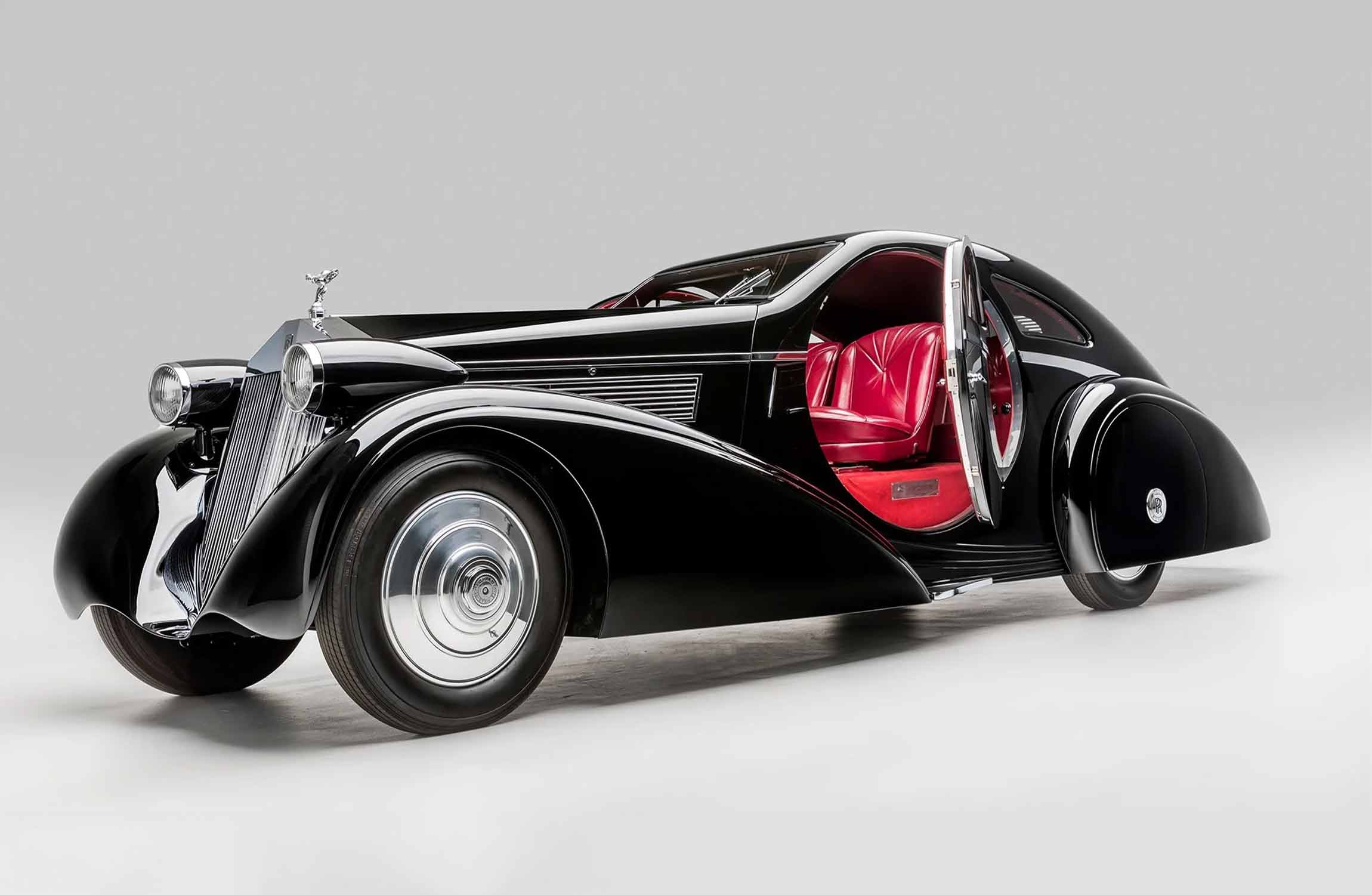
Among the museum’s most extraordinary highlights stands the 1925 Rolls-Royce Phantom I, a foundational masterpiece in the evolution of British automotive aristocracy. Introduced as the successor to the legendary Silver Ghost, the Phantom I marked a new chapter in refinement, scale, and engineering excellence. Powered by a commanding 7.7-liter inline-six engine, the Phantom I delivered remarkable torque and near-silent operation, characteristics that cemented Rolls-Royce’s reputation as “the best car in the world.”
Yet its significance extends far beyond mechanical specification. In the 1920s, Rolls-Royce supplied only the chassis and drivetrain; the bodywork was entrusted to elite coachbuilders who translated the personal vision and social stature of each client into bespoke form. Each Phantom I was therefore a singular expression of wealth and identity. Industrial magnates, European aristocrats, and influential tastemakers commissioned these automobiles not simply as transport, but as moving declarations of power and cultivated taste.
The elongated hood, upright Pantheon grille, and dignified proportions became architectural codes of prestige that continue to inform the brand’s design language today a philosophy that extends beyond automobiles into exclusive lifestyle collaborations, including the remarkable Rolls-Royce × Bovet timepiece we explored in our dedicated feature. Viewing the 1925 Phantom I within the Petersen’s curatorial framework allows visitors to appreciate its place within the broader trajectory of luxury mobility. It is not merely a vintage automobile; it is a cornerstone in the construction of modern automotive luxury, a direct ancestor to today’s ultra-bespoke Rolls-Royce commissions.
For connoisseurs, standing before this Phantom is an encounter with origin the genesis of a philosophy that equates silence with power and craftsmanship with status.
Automotive Design as Industrial Art
What distinguishes the Petersen Automotive Museum from many institutions worldwide is its treatment of the automobile as industrial sculpture. Lighting, spatial arrangement, and narrative sequencing are orchestrated with the same discipline found in contemporary art museums. Chrome, lacquer, hand-stitched leather, exotic wood veneers these materials are presented not as functional components, but as artistic expressions shaped by human mastery.
The museum makes clear that luxury automobiles are not merely engineering achievements; they are collaborative works of art involving designers, engineers, coachbuilders, artisans, and visionary patrons. This layered complexity resonates deeply with the Luxury Media Journal audience, for whom craftsmanship and heritage are inseparable from value.

A Must-Visit Destination for the Global Luxury Traveler
In an era defined by experiential wealth, travel is increasingly measured by intellectual depth and narrative richness rather than simple extravagance. The Petersen Automotive Museum delivers both. It offers an immersive exploration of how automobiles shaped cultural aspiration, architectural design, technological innovation, and social hierarchy.
Strategically located in Los Angeles a city synonymous with glamour, performance, and ambition the museum can be seamlessly integrated into a broader luxury itinerary. A private guided tour can be paired with bespoke shopping in Beverly Hills, a curated dining experience, or an exclusive automotive drive along the Pacific Coast Highway. The result is not simply tourism, but thematic travel centered around design, motion, and heritage.
For collectors, enthusiasts, and global tastemakers, the Petersen Automotive Museum represents something rare: a public institution that feels as intellectually serious as a private collection. It honors the automobile not as transportation, but as one of the most influential luxury artifacts of the modern era.
And within its walls, the 1925 Rolls-Royce Phantom I stands as enduring proof that true prestige is not manufactured overnight it is engineered, commissioned, and preserved across generations.
Image
Gallery.


Explore
Related posts.

Get
Inspiration
@luxurymedia