
Join Our Journal

.svg)



Inside the €1.35 Million Jaeger-LeCoultre Reverso Quadriptyque: The World’s First Four-Faced Watch
Discover the €1.35 million Jaeger-LeCoultre Reverso Quadriptyque the world’s first four-faced watch, combining extreme mechanical innovation, rare complications, and unmatched horological expertise.
In the world of haute horlogerie, true innovation is rare.
Most high-end watchmaking today focuses on refining existing complications thinner cases, improved precision, or aesthetic reinterpretations of classic designs. But every so often, a manufacture introduces something that genuinely redefines what is mechanically possible.
The Jaeger-LeCoultre Reverso Quadriptyque belongs to that category.
Presented as part of the Hybris Mechanica collection, this €1.35 million timepiece is not simply another grand complication. It is the first watch ever created with four fully functional dials, each delivering independent and highly complex information.
A Reverso Taken to Its Absolute Limit
The Reverso is one of the most recognizable watch designs ever created. Originally developed in 1931 for polo players, its reversible case allowed the wearer to protect the dial during matches.
With the Quadriptyque, Jaeger-LeCoultre has pushed that concept far beyond its original purpose.
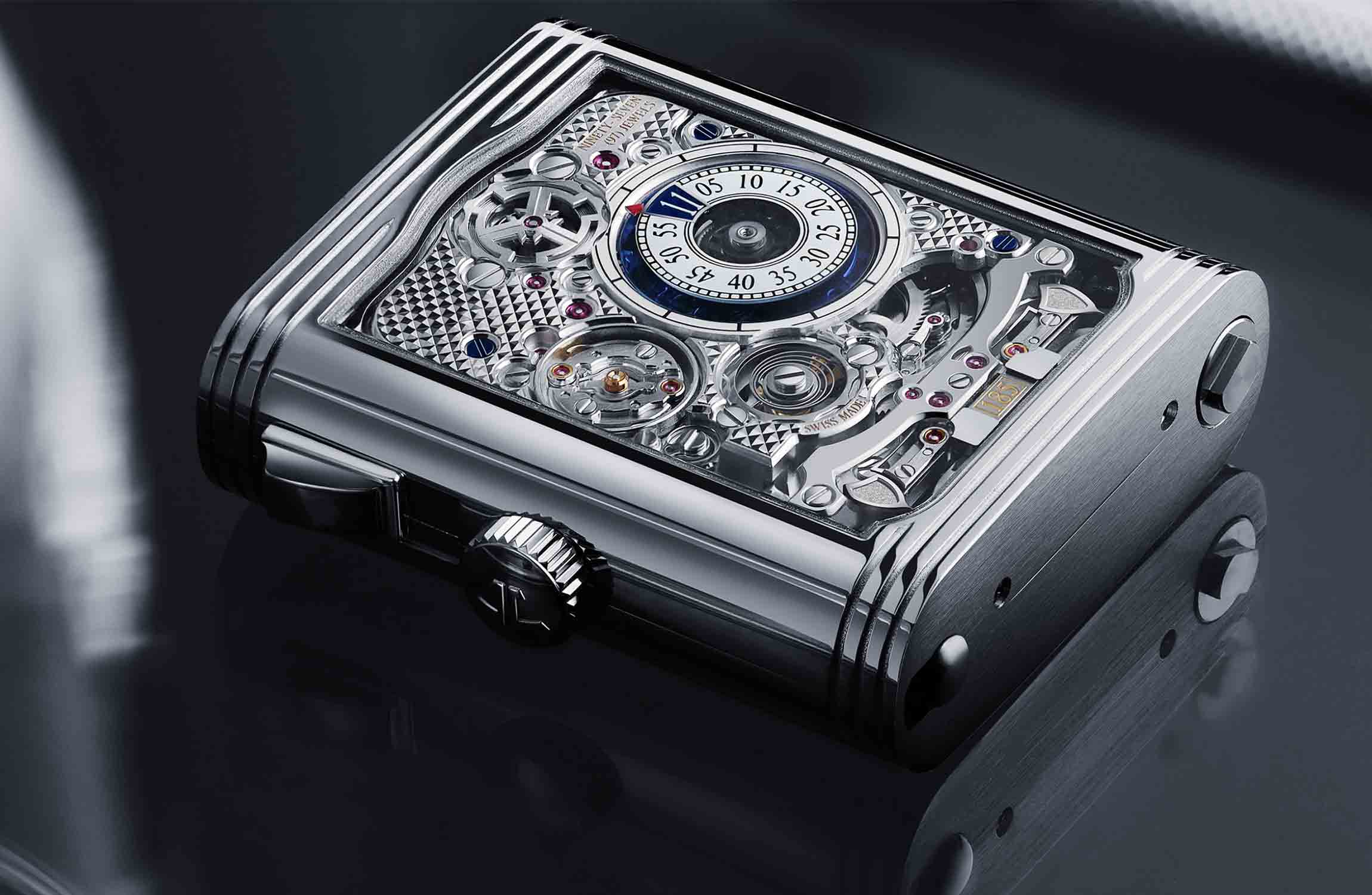
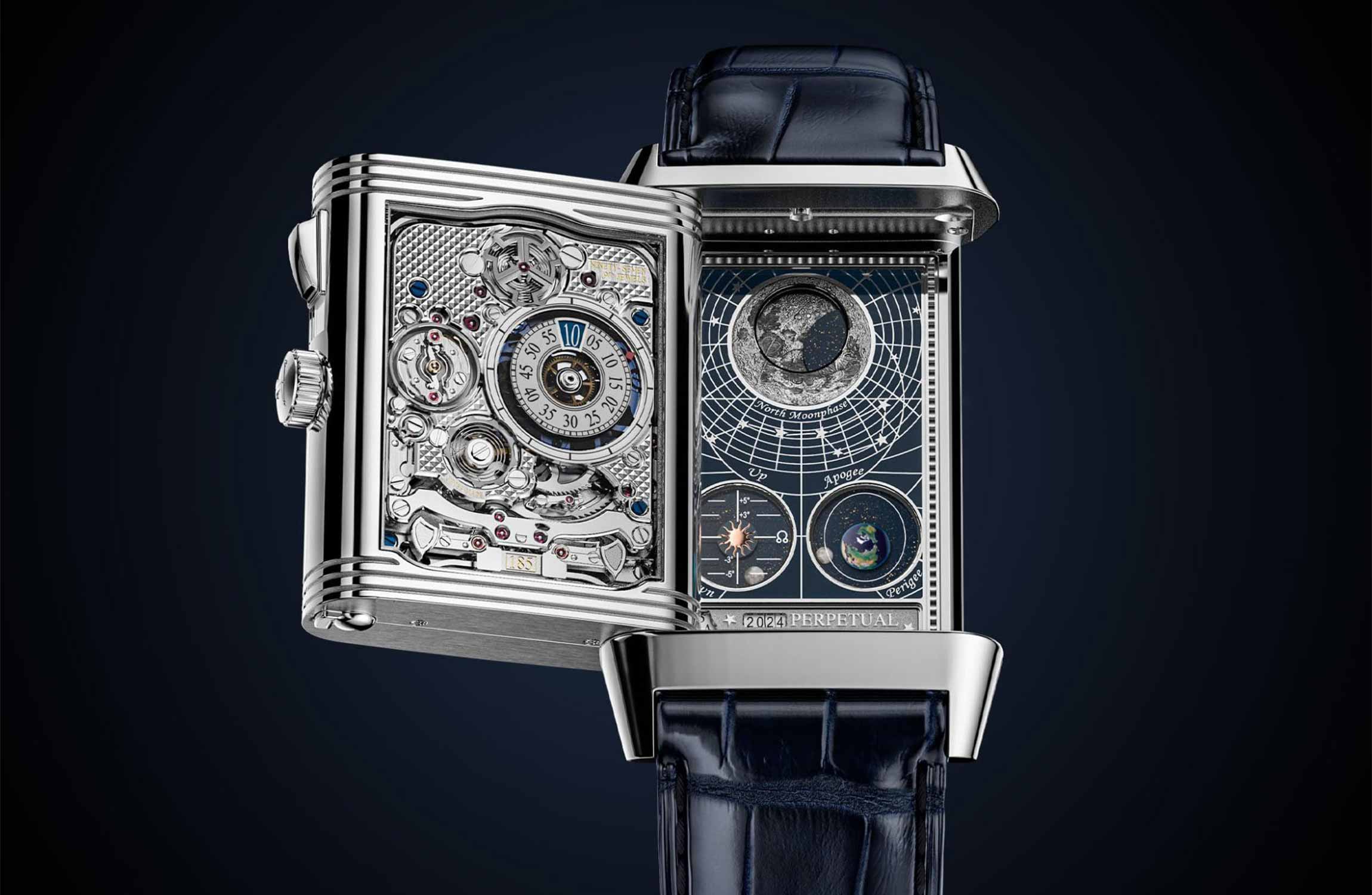
Instead of two sides, the watch features four distinct faces, distributed across a complex case architecture that includes:
- The main watch head
- A rotating carriage system
- An additional cradle module
Each surface is not decorative it serves a mechanical function.
This is where the Quadriptyque separates itself from most high complications currently on the market.
Four Dials, Four Mechanical Functions
The strength of the Quadriptyque lies in its architecture. Each dial has a clearly defined role:
1. Front Dial (Classic Reverso Display)
- Hours and minutes
- Grande date
- Perpetual calendar
This is the most “traditional” face, designed for daily readability.
2. Second Dial (Reverse Side)
- Digital hour display
- Minute indication
- Day/night indicator
This dial introduces a different reading format, offering an alternative interpretation of time.
3. Third Dial (Cradle Module)
- Additional time zone
- 24-hour display
Designed for travel, this layer adds a practical dimension to an otherwise highly complex watch.
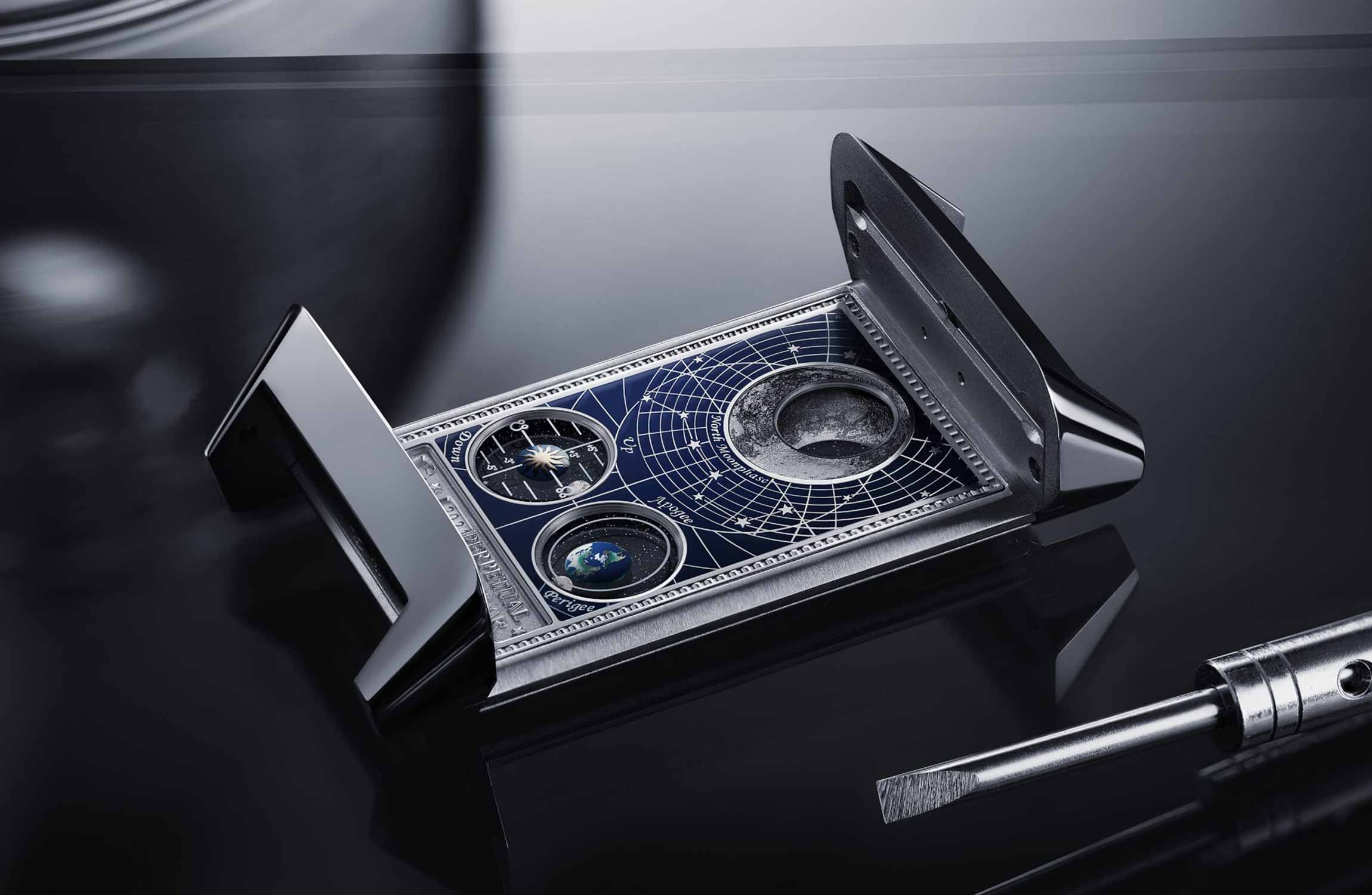
4. Fourth Dial (Astronomical Display)
- Moon phase (extremely precise)
- Orbital cycles
- Advanced astronomical indications
This final face transforms the watch into an astronomical instrument, going far beyond conventional complications.

Calibre 185: Engineering at an Extreme Level
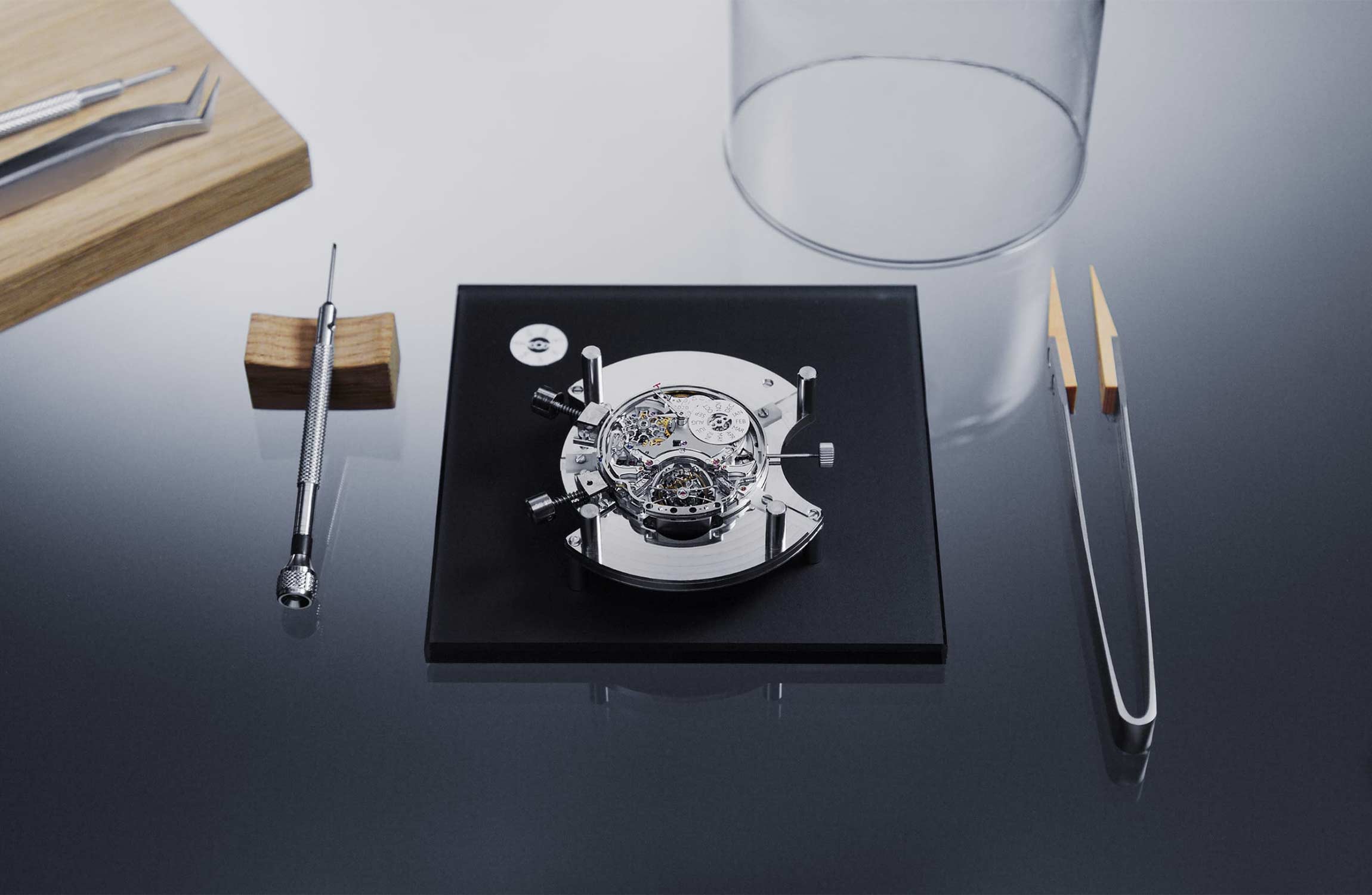
At the core of the watch is the Jaeger-LeCoultre Calibre 185, a movement composed of over 800 components.
The challenge here is not just complexity it is integration.
All four dials are powered and synchronized through a single mechanical system, requiring:
- Precise energy distribution
- Advanced gear train architecture
- Perfect alignment across multiple layers
This level of engineering places the Quadriptyque among the most sophisticated watches ever produced.
For readers interested in how ultra-complex watchmaking compares across the industry, you can explore your feature on rare high-complication timepieces.
Production, Rarity and Market Position
The Quadriptyque is produced in an extremely limited series of 10 pieces worldwide.
At a price point of €1.35 million, it sits firmly in the category of:
- Collector-grade timepieces
- Investment-level watches
- Museum-quality mechanical objects
Unlike more commercial luxury watches, this model is not designed for volume or visibility. It is targeted at a very specific segment of collectors who prioritize mechanical innovation and rarity.
Why This Watch Matters in Modern Haute Horlogerie
In today’s high-end watch market, a large number of brands focus on external differentiation case materials, dial aesthetics, or limited-edition positioning. While these elements remain important, they do not fundamentally redefine watchmaking.
The Reverso Quadriptyque operates on a different level.
Its relevance comes from mechanical architecture, not presentation. Jaeger-LeCoultre is not attempting to create a visually disruptive watch it is demonstrating its ability to engineer a fully integrated system capable of managing multiple high complications within a single structure.
This distinction is critical.
In haute horlogerie, true authority is not built on branding or scarcity alone, but on the capacity to design and manufacture complex movements in-house. Very few maisons operate at this level of vertical integration.
For comparison, even the most respected names in the industr including those known for pushing the boundaries of complication approach complexity through different philosophies, as explored in your article on Patek Philippe’s most advanced timepieces.
Where Patek Philippe emphasizes long-term refinement and classical complication mastery, Jaeger-LeCoultre, with the Quadriptyque, demonstrates structural innovation a different but equally significant contribution to modern watchmaking.
A Watch Built for a Very Small Circle
The Reverso Quadriptyque is not designed for versatility or daily wear.
Its purpose is far more specific. It functions as a technical statement a piece created to demonstrate what can be achieved when constraints are removed and engineering takes priority over usability.
With only 10 pieces produced worldwide, the watch is positioned within an extremely narrow segment of collectors. These are not clients looking for status alone, but individuals who understand the mechanical and historical value of such a creation.
From a practical standpoint, the watch is complex to use, delicate in nature, and highly specialized. But none of these elements are limitations in this context they are part of its identity.
Because ultimately, the Quadriptyque is not competing with other luxury watches. It is setting a new reference point. Not in terms of price, but in terms of mechanical ambition and execution.
Image
Gallery.


Explore
Related posts.

Get
Inspiration
@luxurymedia